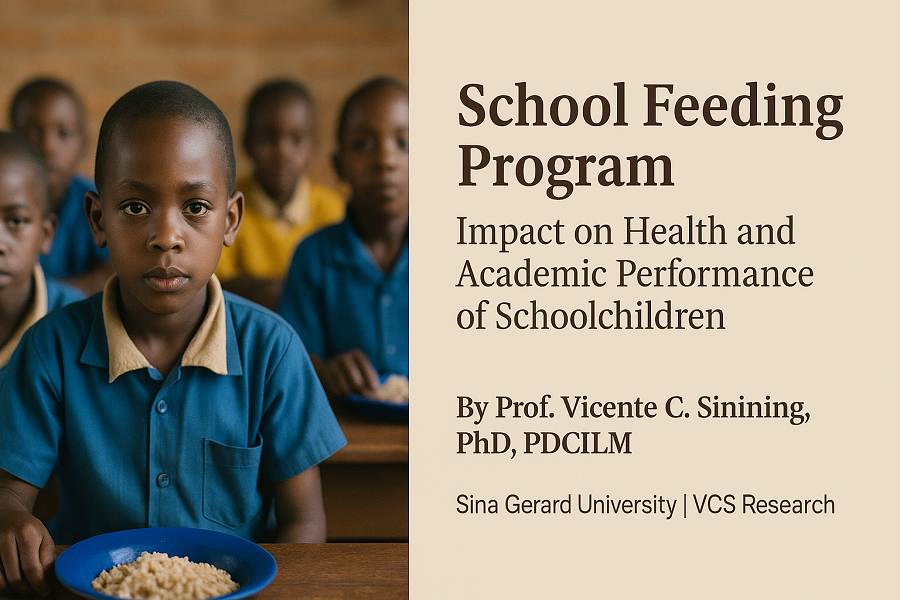
NOTE: This paper was presented at the First International Research Congress at Cebu Doctors University, Philippines, in 2023.
ABSTRACT
This study examines the impact of school feeding programs on the health and academic performance of children in the first nine years of basic education in selected districts of Rwanda’s Northern Province. School feeding is not merely a nutritional intervention—it is a transformative strategy for learning and equity. With students spending a significant portion of their day in schools, educational institutions have a moral and ethical obligation to respond to the pressing challenges of child hunger and malnutrition. The researcher analyzed attendance rates and academic outcomes before and after the implementation of the feeding program, utilizing empirical data, policy reports, and global best practices. Results indicate notable improvements in student health, school attendance, and academic achievement. The paper advocates for national policies that institutionalize school feeding programs as a sustainable approach to improving educational outcomes and child well-being.
Keywords: school feeding program, health, nutrition, school attendance, academic performance
1. Introduction
Education and health are twin pillars of human capital development. For school-aged children, these intersect most effectively through School Feeding Programs (SFPs), which have gained global recognition as cost-effective tools to enhance learning and well-being. According to the FAO (2022), undernutrition and food insecurity continue to hinder the cognitive development and academic success of millions of children worldwide.
In Rwanda, particularly in the rural districts of the Northern Province—where geographic remoteness exacerbates food insecurity—the Ministry of Education (MINEDUC, 2020) has taken steps to integrate feeding programs within school systems. This paper explores how such interventions improve school participation and performance, positioning school feeding as a critical policy tool for reducing inequalities in education and promoting inclusive development.
To read the full academic paper, click here.
To access various published papers in international journals authored and co-authored by Prof. Sinining, click here.