Civic Education in Rwanda: The Impact of the Itorero Program
A collaborative research
By
Prof. Vicente Sinining, PhD, PDCILM
Full Professor, Faculty of Education
University of Technology and Arts of Byumba
Republic of Rwanda
and
Dr. Wioleta Gierszewska
Iniversity of Gdansk, Poland
NOTE:This paper was originally published in the international scientific journal " Edukacja Miêdzykulturowaa" 2023, nr 4 (23) ISSN 2299-4106, Poland.
DOI: 10.15804/em.2023.04.03
Abstract
The authors discuss the transformation in civic education in Rwanda. Before the arrival of the colonizers, Rwanda had traditions in education and uniting societies. Colonialism destroyed the educational system and divided the society. The re-introduction of the traditional system has been also explored – the example of the Itorero program and its impact on the unity and reconciliation efforts of the government – on the basis of various conducted studies. The main aspects that are taken into account in this study include: the significance of civic education, the Itorero program and the best predictors of success, and the role of civic education in promoting the well-being of communities and nations. The authors not only analyze the functioning of the Itorero institution, but also aim to seek answers to the questions of whether and to what extent the Itorero program affects civic education and to what extent it is an effective tool for uniting the Rwandan society.
Conclusion
The current policy of the Rwandan government is aimed at even greater public involvement in the Itorero programme. It should be concluded that in the coming years the number of people covered by the program, especially among young people, will systematically increase. It is estimated that around 10 million Rwandans, including school children, have been trained under the Itorero program since its introduction. The process of rebuilding the state, uniting ethnic groups after the genocide was not and is not a simple process. The memory of the wrong done, the desire for revenge - these feelings inherent in the majority of society could not be eliminated overnight. The trauma and memory of these events remained for a long time. Wound healing is a long-term process. Despite this, the Rwandans managed to bring about peace and harmonious cooperation within the state. In this case, the return to tradition and pre-colonial values, including the Itorero programme, turned out to be extremely helpful. The joint work of the nation, the adherence to the values that unite the society , make it possible to effectively implement the process of rebuilding the state. Regardless of the criticism of military training under the program, it should be emphasized that Itorero teaches discipline, working together and caring for the values of traditional culture. This seems to be the key to Rwanda's development. The program helps Rwandans learn about their pre-colonial history and cultivate their traditions. We believe that this is the most important element of civic education and building national identity. In the coming years, the program will increase national awareness, the need for unity and joint work for the country.
Click here to read the full paper
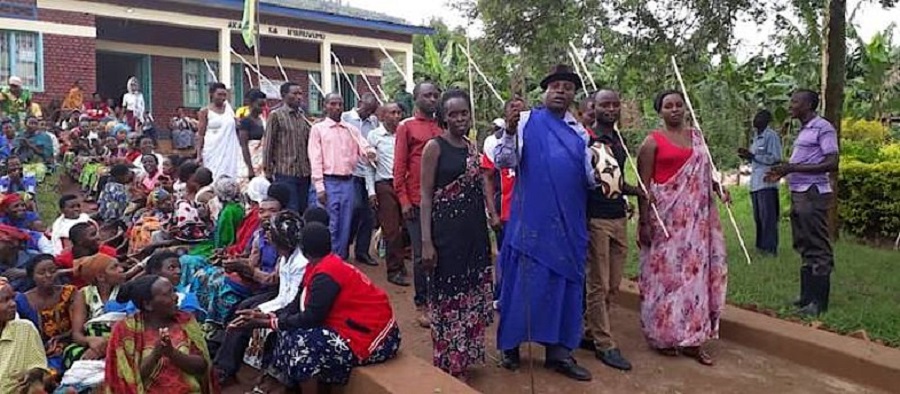
HATANGIJWE ITORERO RY'UMUDUGUDU. Photo by ngoma.gov.rw.


