Lifelong Learning, Soft Skills and Employability of University Graduates through Creative Educational Environment
By
Prof. Vicente Sinining, PhD, PDCILM
Full Professor, Faculty of Education
University of Technology and Arts of Byumba
Republic of Rwanda
and
Mr. Costase Nsengiyaremye
Tutorial Assistant
The University of Technology and Arts of Byumba
NOTE: Embargoed document, under peer review for publication in an imternational journal in Europe in 2024.
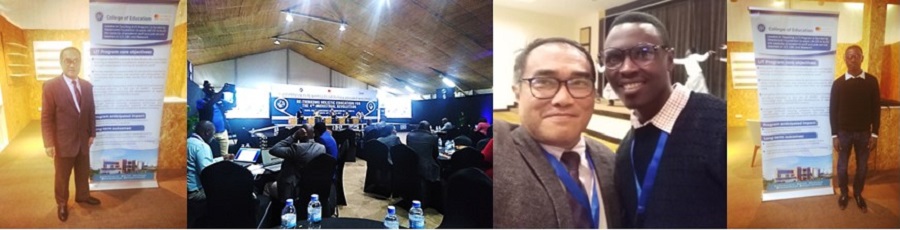
This paper was presented at the 1st International Conference on "Re-shaping Education for Sustainable Development" in Kigali, Rwanda, March 2023.
ABSTRACT
Lifelong learning is self-sustainable learning throughout life to cope with society and change. It implies flexibility, availability, and applicability of learning throughout life. Employability as a supporting objective for learning engagements in higher education institutions navigates the learning environment for creative/innovative acquisition of knowledge and the development of soft skills. Creative intelligence is transforming learners beyond their courses of study, that is, being life long-learners and implementers of worthwhile contributions to society today and in the future. How HEIs combine lifelong learning and soft skills for the employability of graduates in a creative learning environment is a challenge that needs to be addressed. The authors studied various studies on the impact of creativity in teaching and learning in higher education, the impact of a creative classroom environment on lifelong learning, soft skills, and the employability of the students. Based on authentic references, experiences, and empirical evidence, the authors presented salient knowledge and came up with effective educational approaches and effective strategies on how to incorporate various kinds of environments into the process of learning and teaching intended for researchers, educational practitioners, decision-makers, teachers, and students. In today's competitive world and with advancing technologies, HEIs are more and more under competitive pressure to produce graduates that are globally measured by the competent skills and employability of the graduates.
Introduction
In an era defined by technological disruption, shifting labor markets, and global interconnectivity, lifelong learning—the continuous, self-motivated pursuit of knowledge across one’s lifespan—has emerged as a foundational imperative. Institutions of higher education are increasingly called upon to serve as catalysts for this paradigm. Global frameworks, such as the United Nations Sustainable Development Goals (SDG 4), urge nations to “ensure inclusive and equitable quality education and promote lifelong learning opportunities for all,” underscoring the strategic role of universities in cultivating agile, future-ready graduates.
Click here to read the full paper.