Currency Devaluation and its impact on the lives of ordinary people.
By
Prof. Vicente Sinining, PhD, PDCILM
Full Professor, Faculty of Education
University of Technology and Arts of Byumba
Republic of Rwanda
NOTE: This article was originally published in Light Magazine issue number 13, March-April 2018.
Good economic governance, including transparency in financial management, is an essential prerequisite for promoting economic growth and reducing poverty (NEPAD 10). We have witnessed several regions in the world now committed to bridging markets, connecting peoples. President Paul Kagame, as Chairman of the African Union, has encouraged AU Member States to deal with issues crucial to Africa's development, economic growth and poverty alleviation. In my view, poverty in the region can be reduced if all barriers to regional economic integration are eliminated. Talking about economic policies, I am encouraged by my students to write about why many Least Developed Countries (LDCs) like Rwanda, has to devalue their currencies in the pursuit of economic growth.
"Public office is a public trust. " Individuals that serve in government are stewards of the people's will. Thus, they are responsible to carry out programs that bring about a better quality of life among all citizens. Leaders and followers must realize that doing what is right translates into higher economic value. Going back to the value of the country's currency, latest statistics have shown that Rwanda experienced the greatest devaluation at 8.5% in 2016 against the USD and the EURO. Kenya showed the lowest devaluation at 1.1% among its EAC counterparts. One student raised the question: Did the devaluation of RWF improve the lives of all citizens in Rwanda?
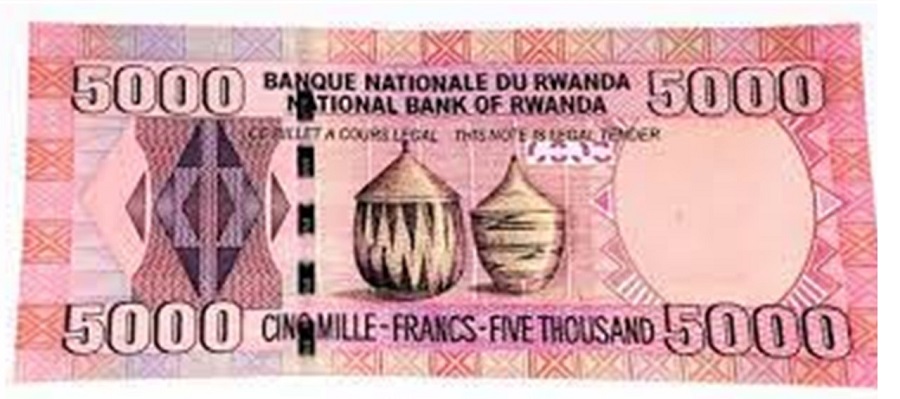
The question, in my view, could be a good topic in conducting a research to help our policymakers make informed decisions. I encouraged graduate students who are majoring in Economics to do so, and come up with a paper that can be useful and helpful to the country. Many Least Developed Countries, if not all, have devalued their currencies in the pursuit of economic growth, as well as in dealing with current account deficits and inflation. Currency devaluation means a fall in the value of a currency, making it worth less compared to other foreign currencies like the USD and EURO.
What are the advantages and disadvantages when the currency is devalued? When RWF is devalued, exports become cheaper. The exchange rate will make exports more competitive and appear cheaper to foreigners. Thus, the increase in the demand to buy Tea, Coffee and other products made in Rwanda. This will also make Rwanda assets become more attractive as real estates will make it cheaper for foreigners to buy. However, to the locals, it will be hard to afford these properties.
A currency devaluation will discourage buying imported materials, and encourage buying local products. This means imported products like petrol, food and other raw materials that are produced overseas become expensive. For countries that import petrol or oil, like Rwanda, this will make it difficult for ordinary people to afford even their basic necessities. The negative impact to the low-wage earners is that they will find it hard to budget their incomes as transportation cost will rise. You do the basic math, once the cost of petrol increases, the prices of the products you buy in the market also increase while average earnings remain flat.
Following a currency devaluation, inflation is likely to occur. What is inflation? Investopedia defines it as the rate at which the general level of prices for goods and services is rising and, consequently, the purchasing power of currency is falling. Central banks attempt to limit inflation, and avoid deflation, in order to keep the economy running smoothly. As a result of inflation, the purchasing power of a unit of currency falls. For example, if the inflation rate is 6.23%, then a kilogram of sugar that costs RWF 900 in a given year will cost RWF 956.07 the next year. As goods and services require more money to purchase, the implicit value of that money falls. Inflation Rate in Rwanda averaged 6.23% from 1997 until 2018, reaching an all-time high of 28.10% in February of 1998 and a record low of -15.80% in February of 1999. Trading Economics reported that consumer prices in Rwanda edged up 0.1% year-on year in January of 2018, recovering from a 0.2% fall in the previous month. On a monthly basis, consumer prices were flat, compared to a 1.9% drop in December 2017. When it comes to minimum wage in Rwanda, the government has a mandated minimum wage rates ranging from 500 to 1000 Rwandan Francs per day ( $0.83) in the tea industry and 1500 to 5000 Francs a day ( $2.50 to $8.30 ) in the construction industry. Rwanda's yearly minimum wage is $496.00 in International Currency ( this data was based on the 2009 currency exchange rate). It is not a surprise therefore that when RWF is devalued, many Rwandans earning a minimum wage are affected with the rising cost of living.
Inflation occurs when imports are more expensive. With exports becoming cheaper, manufacturers may have less incentive to cut costs and become more efficient. Therefore, over time, costs may increase. Economists suggest that sound monetary policies in the long term can prevent depreciation of currency. Borrowing and loans should be kept to a minimum by the government. Export-oriented development policies can create a higher demand for the currency on the global markets.
A devaluation also causes falling real wages as a result of inflation. In a situation where the rate of inflation is higher than wage increase, real wages will fall. Real wages are defined as wage in current money adjusted for the price level.
Experts in finance and economics argue that the strength and stability of a nation's finances are strongly correlated to the rising and falling of a nation's currency value. Investopedia reiterated that the current and future perceived prosperity of a country impacts the value of that country's currency. The more people want that country's money today and believe they will want that country's currency in the future drives the value of that currency in comparison to other currencies. Researches have shown that progressing towards stable and strong fiscal policies help increase values of currencies.
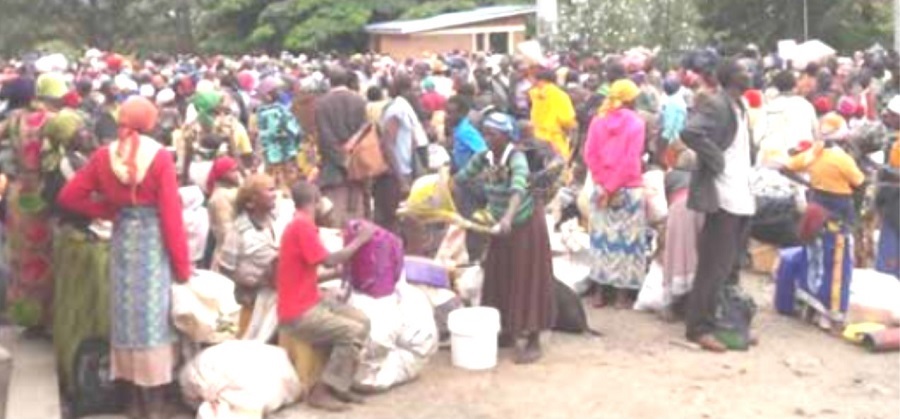
The impact of a devaluation may take time to influence the economy. One of the most common criticisms of currency devaluation is that it causes disproportionate suffering among the poor. Dr. Nicholas W. Minot wrote a paper entitled "Devaluation and Household Welfare in Rwanda" where he examined the distributional impact of price changes associated with devaluation in Rwanda using a simplified household-firm model based on household budget data. The results of his study indicated that price changes associated with devaluation have a proportionately greater negative impact on the real income of urban households than rural, and within each sector a greater impact on high income households than low-income. The main reason for this pattern is that rural and low-income households tend to be insulated from price changes by being less integrated in the cash economy.