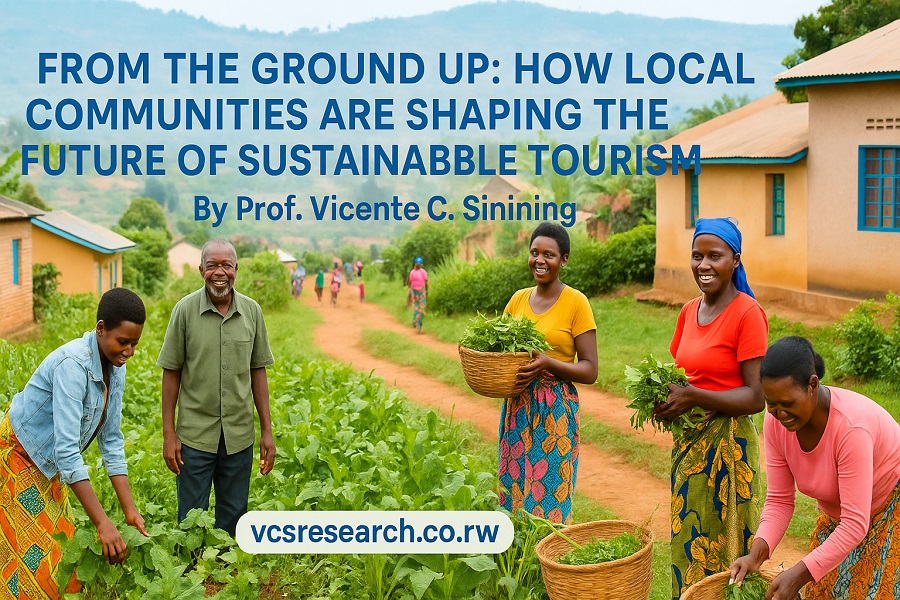
In the age of climate reckoning and cultural rediscovery, a quiet revolution is reshaping the world’s most dynamic yet fragile tourism landscapes. From the floating villages of Ghana to the sacred valleys of Peru, local communities are reclaiming tourism—not merely as participants, but as visionaries of a more sustainable future.
The academic lens is sharpening. A recent study rooted in the doctoral research of Dr. Alphose Habimana and presented by Prof. Vicente C. Sinining reveals a compelling truth: when communities lead, sustainability follows.
Beyond Postcards: Why Community Voices Matter
Tourism, despite its glossy brochures and viral travel reels, often dances on a paradox. It flourishes on uniqueness—culture, ecosystems, traditions—yet threatens to erode these very treasures. Prof. Sinining’s research affirms a pivotal insight: genuine sustainability begins with genuine community agency.
“Empowerment through training, shared governance, and cultural-environmental synergy are not luxuries; they are the essential pillars of sustainability.”
Training for Transformation: Building Capacity from Within
In Chiang Mai, Thailand, locals have become more than guides—they are trailblazers in ecotourism. Through hands-on training, they’ve established homestays, curated artisan markets, and led eco-education experiences. These are not symbolic efforts; they are engines of empowerment.
Yet, barriers persist. Literacy gaps, gender inequities, and resource limitations threaten these initiatives. The study calls for culturally attuned training models that respect local knowledge and meet communities where they truly are.
Power in Partnership: The Rise of Co-Management Models
Imagine tourism governance where villagers, NGOs, and state agencies collaborate on equal footing. This is the essence of co-management. Namibia's conservancies exemplify its success—enhancing biodiversity protection while directly benefiting local populations through shared tourism revenues.
Culture + Conservation: A Dual Mandate
One of the study’s most powerful insights is the interplay between cultural heritage and environmental stewardship. Consider Nzulezo in Ghana: its eco-lodges, inspired by ancestral stilt-house designs, run on solar power and are owned by community cooperatives.
Authenticity is a valuable currency—but one easily exploited. The research warns against cultural staging for tourist consumption and urges a shift toward policies that protect, not perform, cultural identity through community-led tourism models.
Measuring Impact: The Numbers Behind the Narrative
Beyond inspirational anecdotes, the data is compelling:
- Job creation increased by 35% in Southeast Asia and 28% across African case studies.
- Household income rose by up to 45% where community tourism initiatives were implemented.
- New enterprises emerged at a rate of 25–30% in participating communities.
Policy, Technology, and the Road Ahead
For policymakers, the takeaway is clear: static, top-down models no longer suffice. The future lies in adaptive governance—policy frameworks that are informed by, and accountable to, grassroots voices.
Technology offers new frontiers. From immersive virtual tours to blockchain-enabled microfinancing, digital innovations can democratize access, enhance storytelling, and fund local entrepreneurship in tourism.
What’s Next?
The study opens up urgent questions for further exploration: Can these community-led models succeed in over-touristed cities? Which technologies authentically enhance engagement without diluting tradition? And how do we measure long-term cultural and environmental outcomes?
“Sustainable tourism begins when communities stop being spectators and become the scriptwriters.”
The challenge is no longer about giving communities a seat at the table—it’s about letting them set the table.
This article is adapted from the academic paper “Integrating Community Perspectives into Sustainable Tourism Development” by Prof. Vicente C. Sinining, based on the doctoral research of Dr. Alphose Habimana under his supervision at Azteca University (Mexico).
Click here to download the full academic paper by Prof. Vicente Sinining.


